
One of the great successes of Stranger Things was managing to extract, from the mix of references and nostalgia created by the Duffer Brothers, a sense of novelty and charm stemming from the perfectly cast child actors. Although inexperienced, the children conveyed that fascination with all things 80s that allowed older viewers to see themselves in Will and his friends, whilst also resonating with younger audiences, who embraced the group as they grew up over the course of five seasons. The fact is that this combination of a classic coming-of-age journey with the adventurous flair of Hollywood cinema worked largely because of the cast’s ability—a mix of newcomers and veterans—to rise above what might otherwise have sounded repetitive in the script.
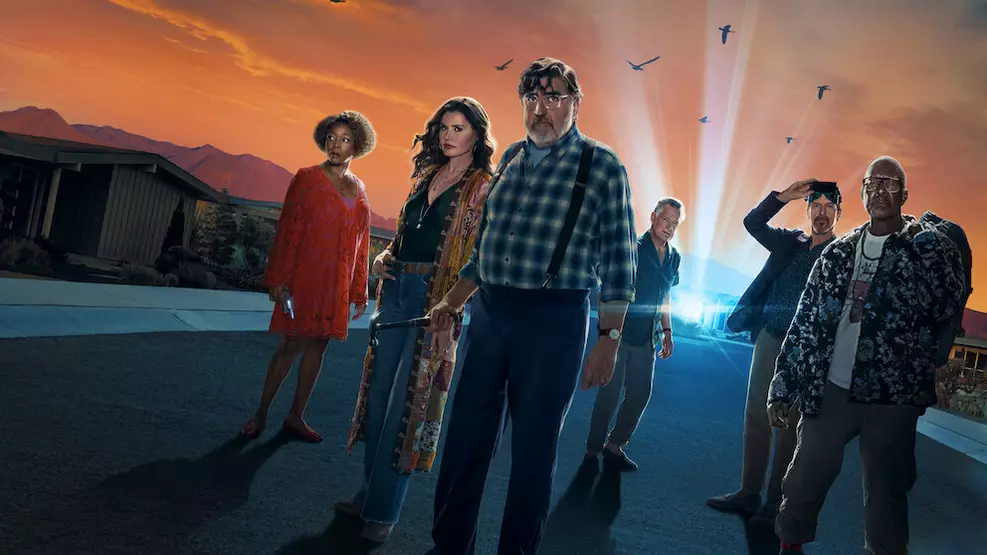
The Boroughs, the Duffer brothers’ latest venture on Netflix, doesn’t offer anything particularly different. The young people leave, the pensioners arrive, and instead of the Upside Down, we have some dark creature living in The Boroughs, a care home for elderly people who were either left there by their families or chose to move there after life’s misfortunes. The core cast features recognisable stereotypes from the outset: a nerd, the journalist, the muse, the hippie, the sceptic. They are led by Sam, the widower played by Alfred Molina, who arrives at the place reluctantly and gradually becomes entangled in the mystery lurking within the community’s walls.
If there is one thing that can be fully salvaged from the series, it is the cast, who in brief moments manage to deliver the charisma the script aims for. Molina has just the right amount of grumpiness and manages to make Sam at least somewhat endearing, even though the script provides neither the space nor the material to find any depth in the story. Everyone else, in their own way, brings a moment of fun and charisma, but they never manage to overcome the script’s inability to make any plot development interesting, particularly as the series lacks the strength to keep its mysteries or the antagonists’ motivations under wraps.
The premise of The Boroughs, which links science fiction with belonging, family and youth, works perfectly in a synopsis or even in the pitch for the story itself. The revelation, which occurs halfway through the eight episodes, has absolutely no impact, as there isn’t even the slightest threat to the characters or those around them. That said, the theme explored by the script—grief, forgetting—remains merely an intention, as the execution itself fails to give any real meaning to anything that is said or shown, since neither the viewer nor the characters can take what is happening on screen even remotely seriously.
