
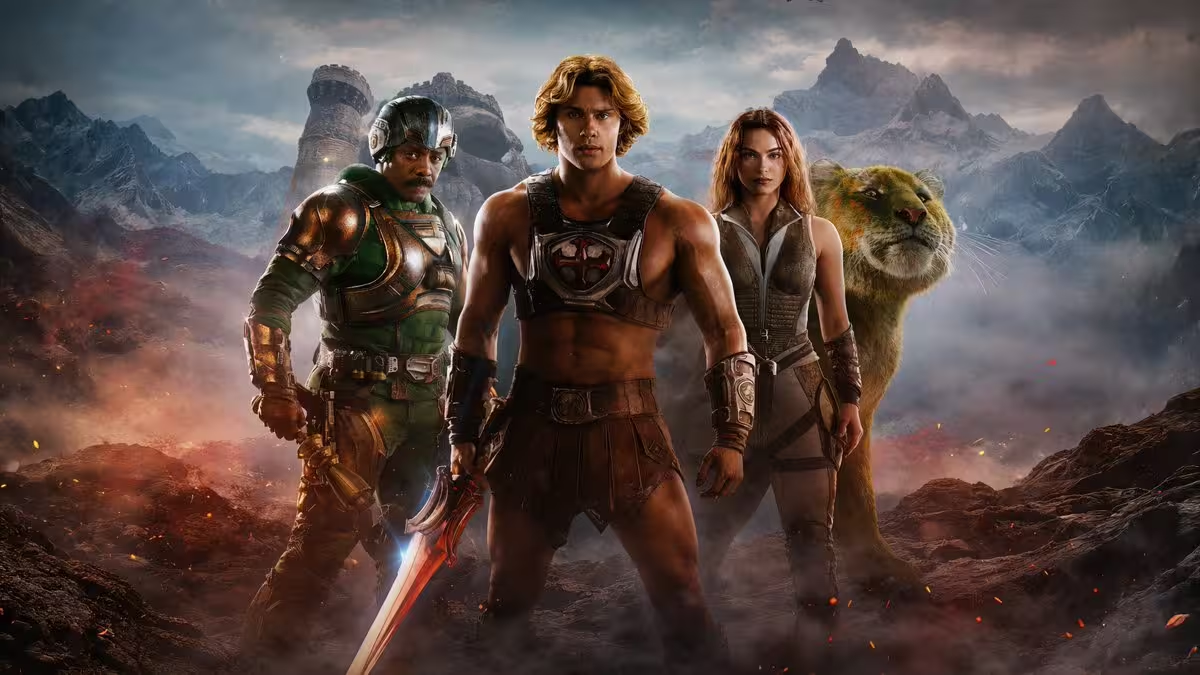
Nostalgia can be a double-edged sword. It can be a Sword of Power, or a dull blade that fails to cut. Perhaps that’s why the new live-action film dedicated to Masters of the Universe had such a troubled development, passing from the hands of the Nee brothers to a Netflix project that was shelved after spending $30 million on it. Until it landed in the hands of Travis Knight, who wielded this mighty sword and used it to strike with conviction.
On the other hand, Knight is someone who knows a thing or two about toys, and that is precisely the original form in which He-Man and the other Masters of the Universe characters were born before becoming comics, animated series, movies, and video games. He knows his stuff because he’s already directed the excellent Bumblebee—one of the Transformers—and because he’s the head of Laika, which produces mostly stop-motion films, effectively animating other toys in a way. After all, isn’t directing sometimes like playing? And in the new cinematic adventure of the Masters, it’s clear that Knight had fun doing just that with these characters.
The (Re)Conquest of Eternia: The Movie’s Story
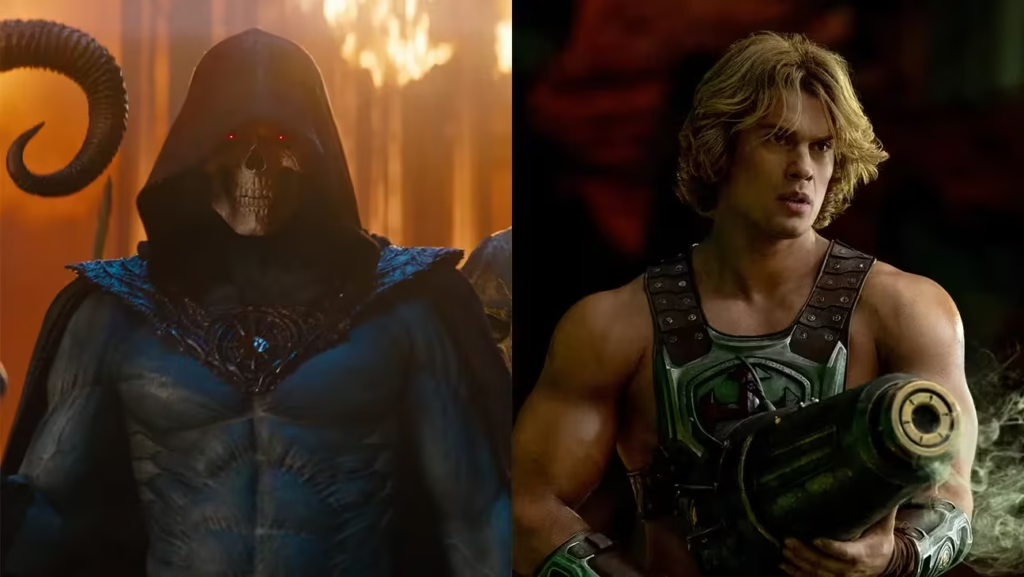
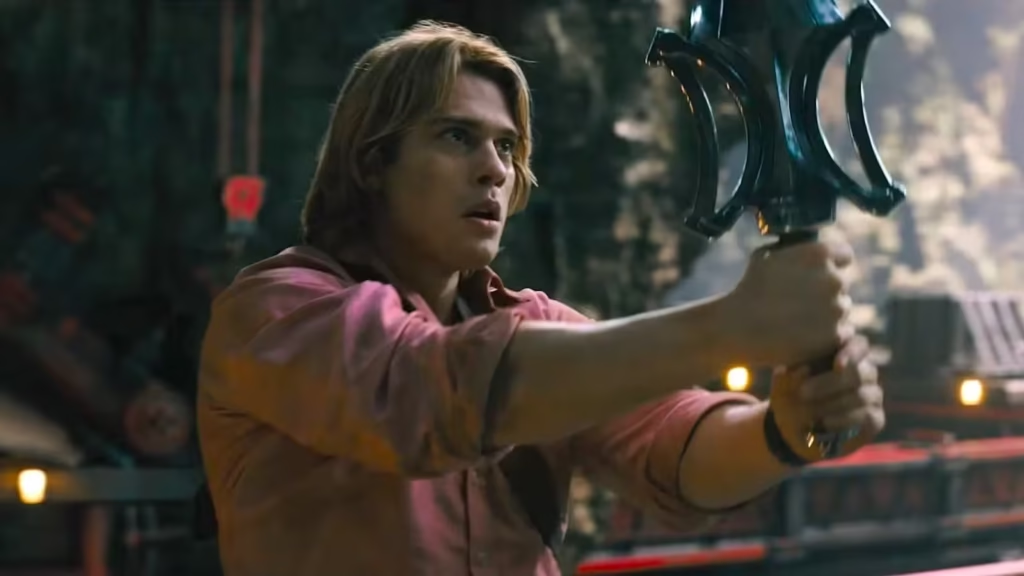
A civil war, an escape, a kidnapping. Thus begins the new cinematic adventure of the young Prince Adam Glenn, brought to Earth from his home planet of Eternia and separated from his ancestors’ Sword of Power. Adam knows, remembers, and longs to return to the world from which he was separated, and he drags himself through an earthly existence that feels too confining for him, until, now an adult, the Sword of Power itself leads him back to his home planet, where he must lead the rebellion against the forces of evil led by the wicked and powerful Skeletor.
But he won’t be alone in this battle, because fighting alongside him are the Sorceress, Teela, Man-at-Arms, and the loyal green tiger Cringer, who transforms into the powerful Battle-Cat. It’s a small group of warriors compared to the enemy’s forces, but Adam/He-Man will manage to bring out their hidden potential and winning qualities.
Nicholas Galitzine and the cast: a human, grounded He-Man
Travis Knight’s Masters of the Universe is structured as a coming-of-age journey—the classic quest, both practical and adventurous as well as inner, that the protagonist must undertake to become the hero we expect to meet. This is why the portion of the story set on Earth is among the film’s most successful elements, as it allows the director to establish the narrative he wishes to pursue, the protagonist Nicholas Galitzine to sketch out the character’s intimate nuances, and the viewer to understand his disappointments, aspirations, and dreams.
While Galitzine fully embodies the director’s vision in the film’s construction, the characters around him are equally well-defined, given the limited screen time they have: Idris Elba is a solid Duncan / Man-At-Arms; Camila Mendes is a Teela who works well alongside the protagonist; Alison Brie, James Purefoy, and Morena Baccarin do their best to give depth to characters with limited screen time. The antagonist Jared Leto, however, deserves a separate discussion; we appreciate him above all for his facial expressions, body movements, and vocal work, given that his face is replaced by a CGI skull.
The successful tone of Masters of the Universe
Knight’s vision is limited by a budget that imposed a few too many constraints. This is evident in the limited screen time given to the tiger Cringer and other situations that feel rushed, such as the third act on Eternia, which suffers from a few hurried moments, but the director compensates for these constraints by striking the right tone for the story—that self-deprecating humor necessary to make characters work who would have seemed less credible in a film that took itself too seriously—while also effectively utilizing the interplay between CGI and practical effects on set.
We appreciated this spirit and the overall tone of the story, which avoided the trap of creating some sort of alternative comic-book movie by pigeonholing itself into a genre that’s currently struggling, capitalizing on nostalgia and the He-Man effect without going overboard. Travis Knight’s Masters of the Universe are not Marvel-style superheroes, but characters with their own weaknesses and strengths upon which a fantasy/adventure saga with growth potential can be built—provided the audience shows enthusiasm and a willingness to follow this path.
Conclusions
Masters of the Universe overcomes the challenges of a complex production and proves to be an intelligent and successful nostalgic endeavor. Travis Knight works around budget constraints with excellent direction of the actors and, above all, by nailing the only possible tone to make Eternia believable in 2026: an adventurous fantasy that never takes itself too seriously, far removed from the logic of comic book movies that seem to have worn out the audience. If audiences respond enthusiastically, the path to a solid, long-lasting franchise is finally laid out. He-Man is back, and this time the Sword of Power seems to be in good hands.
