
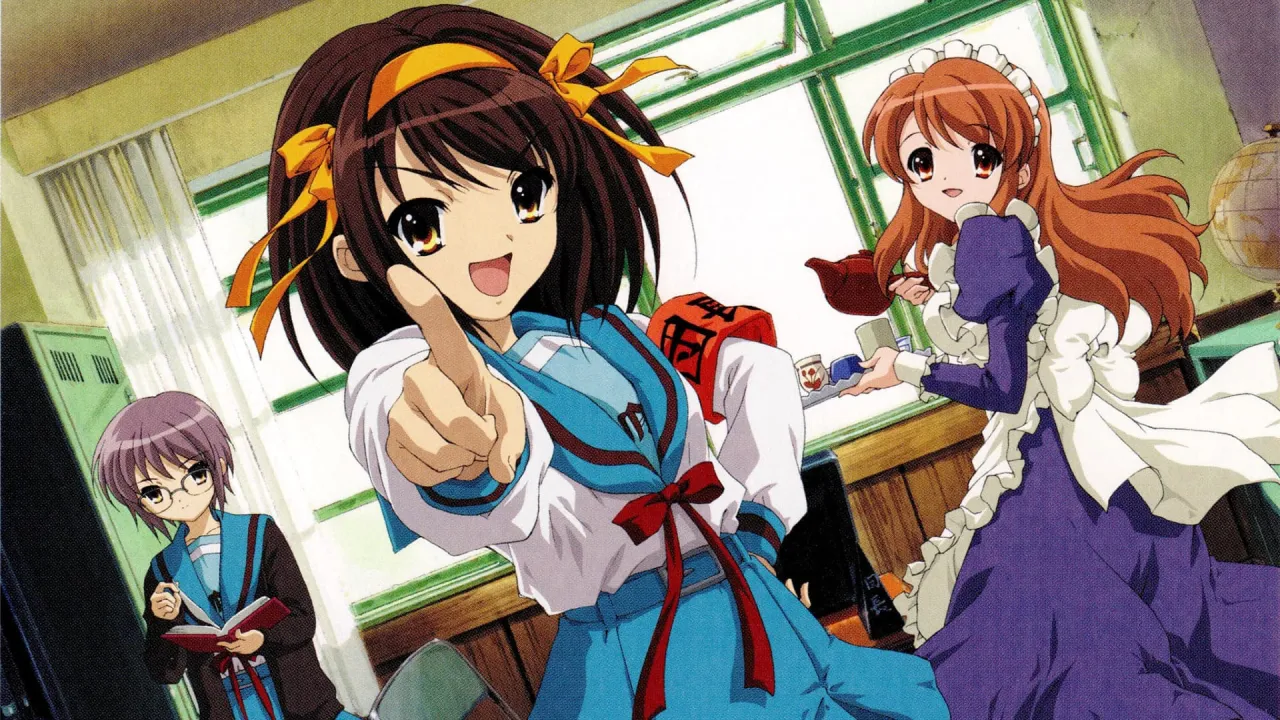
The anime industry has changed, and that leaves classics like “K-ON,” “Suzumiya,” and even “Monogatari” out of the picture. That is the opinion of the president of Buta Productions (an anime production support company), who seems certain that shonen and fantasy anime have completely taken over the scene.
Anime is focusing on very different shows than it did 15 or 20 years ago
Below are some very interesting statements that show how the shift in trends over the past few years is felt from within the industry itself:
“Many genres that were successful in the 2000s and 2010s are gradually becoming niche productions. Animes like Haruhi, K-On, Madoka, or the Monogatari series were the golden goose of an era that would now struggle to secure the same funding and treatment that Shonen and fantasy anime currently receive.”
There’s absolutely no denying the validity of these statements; you only need to look at the kinds of shows that consistently dominate the market. Just by looking at isekai series, it’s clear there are far more of them than atypical slice-of-life shows like K-On! and its peers.
The reality is that fantasy and action are devouring everything anime viewers consume: “Jujutsu Kaisen,” “Kimetsu no Yaiba,” “Frieren,” “Mushoku Tensei”… these are just a few names from the group that represents the industry’s main face at this point. But there are exceptions.
They are niche productions today, but they are still capable of becoming major hits
The two realities can coexist; while the volume of productions mentioned by the president of ButaPro has plummeted, they are still capable of becoming international benchmarks. The clearest example of this in recent years is undoubtedly “Bocchi the Rock.”
That said, anime like “Oshi no Ko” or “Journal With Witch” demonstrate that it’s still possible to move away from action and fantasy and, despite that, come up with stories powerful enough to stand toe-to-toe with the most prominent names of today.
It’s also important to note that the anime industry’s reach today bears little resemblance to what it was 20 years ago; right now, watching anime is much easier worldwide thanks to the involvement of streaming platforms, which has caused the market to change drastically.
In the past, the average anime viewer was someone looking for “strange” stories where the plot held far more mystery and secrets than met the eye. Now, having opened up to a much larger audience, the Shonen-style genre dominates—and while it has logically always been a huge success, it is now a powerhouse with few rivals in its own field.
The anime industry has changed a lot in 20 years and will surely change again in the next 20. What is no longer so common may shine again, and vice versa. After all, we are in a market where trends are the key factor defining viewer consumption. And if the viewer changes, the market will change with them.
