
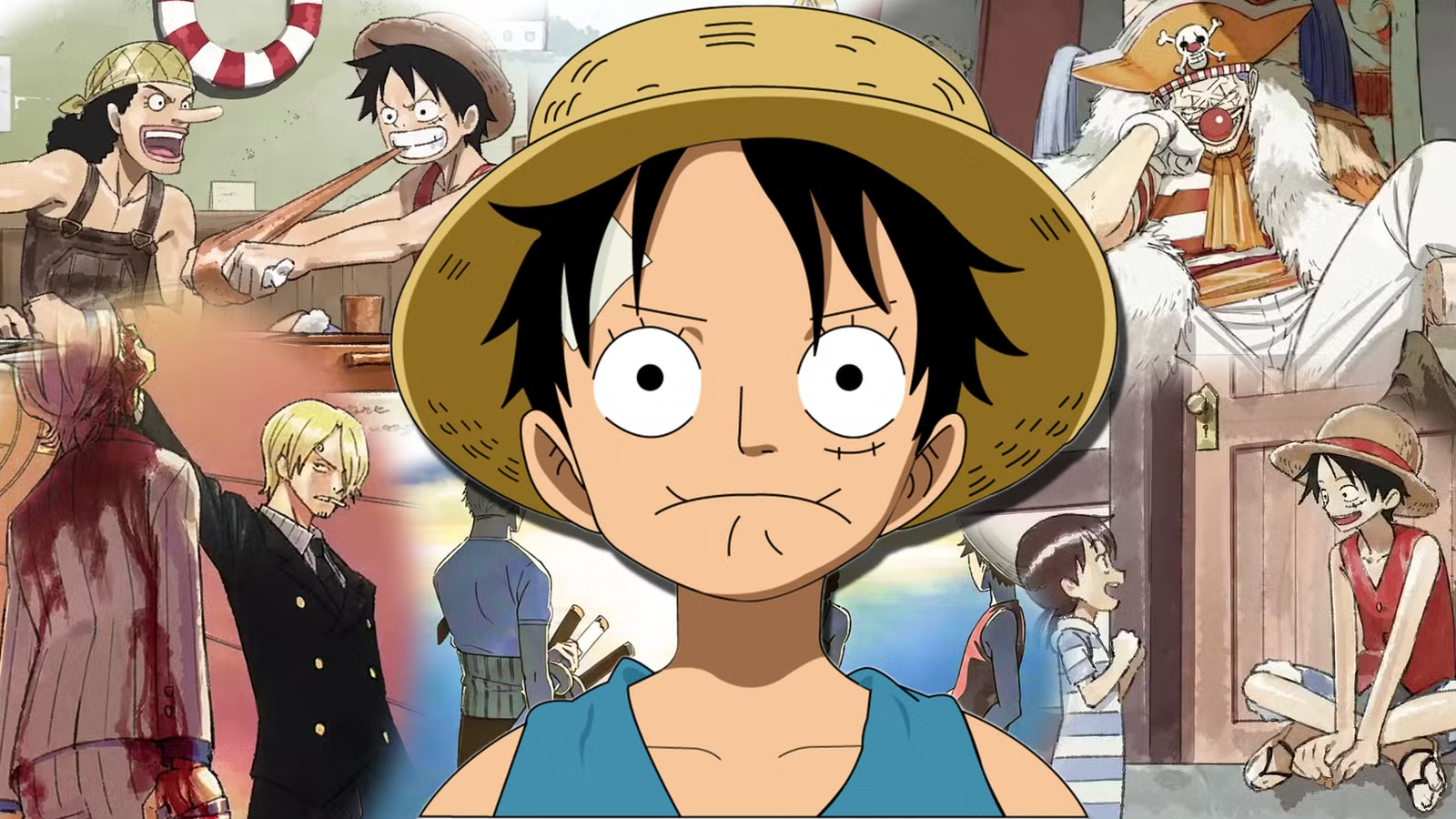
The remake is still more than six months away from its release, yet it’s already raising concerns among fans
Just yesterday, Netflix decided to confirm the premiere of “The One Piece,” the anime remake based on Eiichiro Oda’s work, with two decisions that have already sparked quite a bit of controversy: 40-minute episodes and a storyline that will end right at the entrance to the Baratie.
Why the format of “The One Piece” is jarring
Anyone accustomed to watching anime knows that, with few exceptions, the average length of all episodes in the industry is approximately 20 minutes. This is something that applies to the traditional “One Piece” series itself. However, Netflix has completely changed that with “The One Piece.” Instead, we’ll get 7 episodes of approximately 40 minutes each (there’s no specific runtime per episode, but they confirmed it would be about 300 minutes of footage in total), all of which will be released on the exact same day, thus also bypassing the anime industry’s usual weekly release schedule.
The reality is that this isn’t the first time Netflix has done whatever it wants with its properties. Fans of “JoJo’s Bizarre Adventure” already know all too well what it’s like to be at the mercy of the streaming platform’s release schedule, and the result is rarely satisfactory. The biggest controversy to date came with the premiere of “Steel Ball Run”: a single 50-minute episode followed by a six-month wait that still hasn’t ended, so we don’t even know how many episodes will be released in the next batch. Obviously, the situation isn’t quite as dramatic for “One Piece,” but it does have the same problem: it kills the hype.
Releasing all episodes at once might work for traditional series, but not for anime. Fan culture involves gathering week after week to discuss the highlights of each episode. However, the 40-minute format and simultaneous release make the experience more intense yet fleeting. Because, what’s the point of wanting to change the viewing experience to the extent of proposing 7 episodes of 40 minutes each instead of 14 episodes of 20 minutes each? Not only would you keep fans hooked for more weeks, but it would also make the wait until the next batch feel shorter.
Yes, everyone knows what “One Piece” is. But now is the time to attract new fans. “The One Piece” MUST be the anime that draws in new generations. And yet the proposed changes don’t help with that. Maybe it works because of the nature of the project, but once again Netflix is acting on a whim instead of looking at anime as a product.
Ending at the start of the Baratie arc—a decision that’s questionable, to say the least
“The One Piece” will adapt the first 50 chapters of the manga, which effectively means stopping at the beginning of the Baratie arc. In other words, this season we won’t yet see Sanji become the crew’s cook or Zoro have his epic showdown with Mihawk. And the Baratie arc isn’t exactly remembered for its beginning, but for everything it explores. And the question that keeps popping into my head is: why? What’s the point of half-heartedly introducing a story arc that, once again, everyone already knows about—especially after the live-action film’s release? Wouldn’t it be better to build up to an epic moment in earlier episodes, like the resolution of Usopp’s arc?
Furthermore, a company like WIT Studio actually released 20 episodes simultaneously earlier this year for the original anime “Prism Rondo.” Which, by the way, has gone completely unnoticed despite its warm reception, given the model Netflix proposes. But what I’m getting at is this: if WIT was able to put together 7 40-minute episodes… couldn’t they have stretched out the experience with a couple more, even if it meant delaying the premiere by a few months?
The only reason I can think of for why they decided to go with this approach is that the East Blue arc was told over 100 manga chapters, so the second batch of “The One Piece” episodes will likely be told over 7 episodes, for a total of 14. In other words, pure math… and I’m not sure if that’s the best way to approach a “television” project like this. In short, there are a lot of doubts. It might work anyway because we’re talking about “One Piece.” But precisely because it’s “One Piece,” it’s hard to understand decisions that seem designed for Netflix’s algorithm rather than for how its community consumes anime.
