
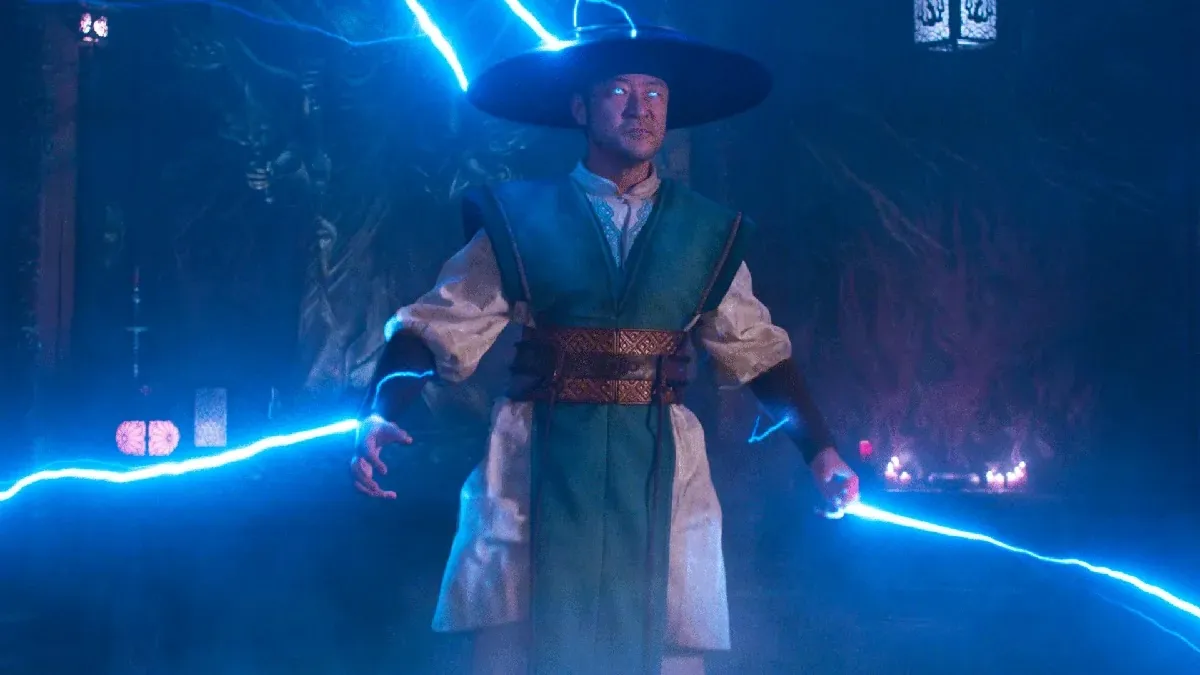
The 2021 Mortal Kombat movie was divisive for many different reasons. It had all the right ingredients, including the promise of bringing to life a world that has captivated generations over the years, and the chance to capture on the big screen all the violent excess of a universe filled with iconic moments and characters that transcend the history of video games itself. Yet that film lacked energy and cohesion, and was soon forgotten by most of the general public. With Mortal Kombat 2, the goal will likely be to overturn the impressions left by its predecessor, addressing the shortcomings and all those elements that were only partially convincing, without drastically altering the narrative foundation.
Simon McQuoid is once again directing Mortal Kombat 2; perhaps, having learned from his experience with the first Mortal Kombat, he’ll want to shake things up and focus more on the characters and the world they inhabit. Written by Jeremy Slater, the sequel to the 2021 reboot will therefore have the task of expanding on a story that was previously only introduced and “hinted at,” as well as redeeming it from the earlier doubts—doubts we discussed at length in our review of Mortal Kombat. Things finally get serious in this second installment: no one will spare anyone.
A tournament to unite them
Mortal Kombat 2 opens with the historical dynamics of Edenia and the clash with Shao Kahn (played by Martyn Ford). Through a brutal duel, the groundwork is laid for a key protagonist of the film: Kitana (Adeline Rudolph). We journey through the family drama that marked her childhood, before returning to the present day. Following the events of the previous Mortal Kombat, the characters of Earthrealm and Netherrealm find themselves chosen by the Ancient Gods to participate in the legendary tournament that gives the film its name.
The situation isn’t looking good, as Earth’s heroes absolutely must win the tournament, while on the other side, Shao Kahn isn’t content with mere victory—he’s driven by a plan that directly involves expanding his power beyond all imagination.
On one hand, then, we once again encounter the characters we met before, now grown and improved in terms of combat (Sonya Blade, Jax, Liu Kang…), with the unexpected addition of a famous face from Hollywood: Johnny Cage (Karl Urban); on the other, we finally enter a world of cruel faces and shadows, where mercy toward others’ lives has never set foot. Everything hinges on the ongoing battles and each character’s story, the choices they will—or will not—face, and the sense of personal sacrifice.
A Broader Scope
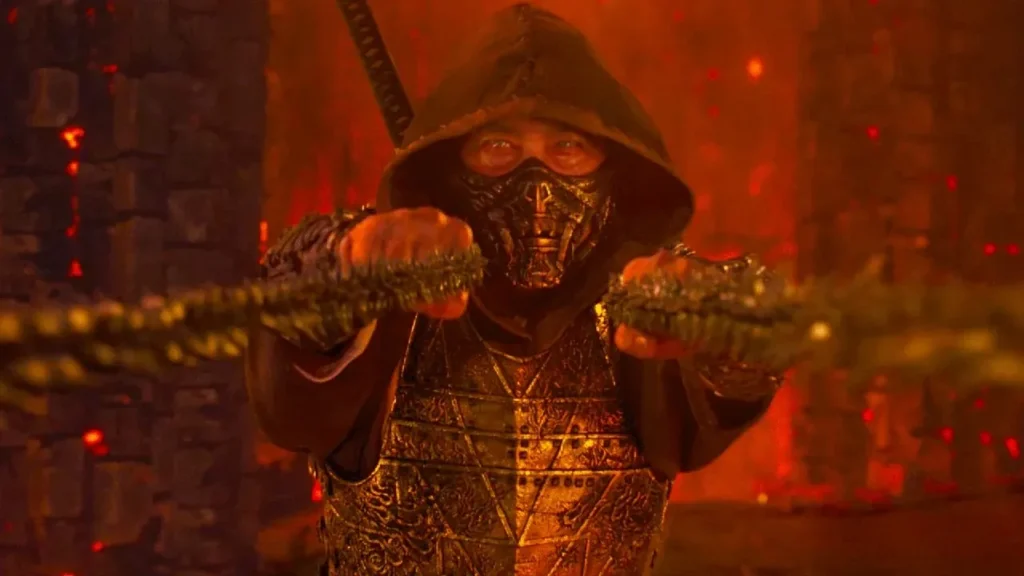
Mortal Kombat 2 broadens its scope, giving the narrative a different perspective and attention to detail compared to the previous film. This is the first added value of a film that manages to better frame the world in which it is set and some of its most famous and iconic characters. The love for video games is palpable from the first scene to the last, only now there is a different order, a more carefully crafted balance—even in the fast-paced moments—that gives the narrative a different texture.
New and familiar faces bring Mortal Kombat 2 to life, and while the storytelling is straightforward and unoriginal, it is the characters who leave a lasting impression here, connecting with the audience through their stories and what they carry within. There are two main protagonists in the story: Kitana and Johnny Cage. Both must search for themselves through two distinct journeys, which in some ways intersect and diverge as the film unfolds.
The video game-inspired “scripting” tends to simplify situations a bit, but it still packs a punch this time around, offering interesting and even lighthearted moments to a film that finally puts the context—the fantasy world where the Mortal Kombat characters have been risking their lives for years—front and center. There is a different creative imprint compared to the past, and this is evident in certain choices regarding direction and set design.
Of course, moving beyond the protagonists’ inner turmoil, the fights are the constant in a Mortal Kombat 2 that finally excels in this regard. These are spectacular and constantly evoke the creative spirit of the video games from which the project originates. Choreographically and aesthetically, there isn’t much to say, thanks in part to Stephen F. Windon’s cinematography, which constantly blends the images, creating an aesthetic suspended between the 1990s and the present day. This also goes hand in hand with a different approach to the costumes.
Of course, the narrative of Mortal Kombat 2 remains simple and very accessible, and a bit more depth generally wouldn’t have hurt. Furthermore, the attempt to “transform” the central dynamics of the previous film is obvious, though it doesn’t always manage to reconcile what we saw in 2021 with what’s being explored in the present-day setting of this sequel. Yet Mortal Kombat 2, unlike its predecessor, is more convincing in many ways, more inspired, and much closer to the hearts of longtime fans of a world that has never ceased to captivate over the years.
Mortal Kombat 2 is a sequel that attempts to remedy the shortcomings of the previous installment, the 2021 film, by broadening the scope of a universe previously only hinted at and by paying closer attention to characters and context. The overall balance, in this case, is slightly more refined, with interesting staging and aesthetics that repeatedly evoke the spirit of video games, especially during the fights. Overall, however, there are still some limitations in terms of depth and consistency with what was established previously. Despite this, Mortal Kombat 2 is more compelling, inspired, and closer to fans’ expectations, marking a clear step forward from its predecessor.
