
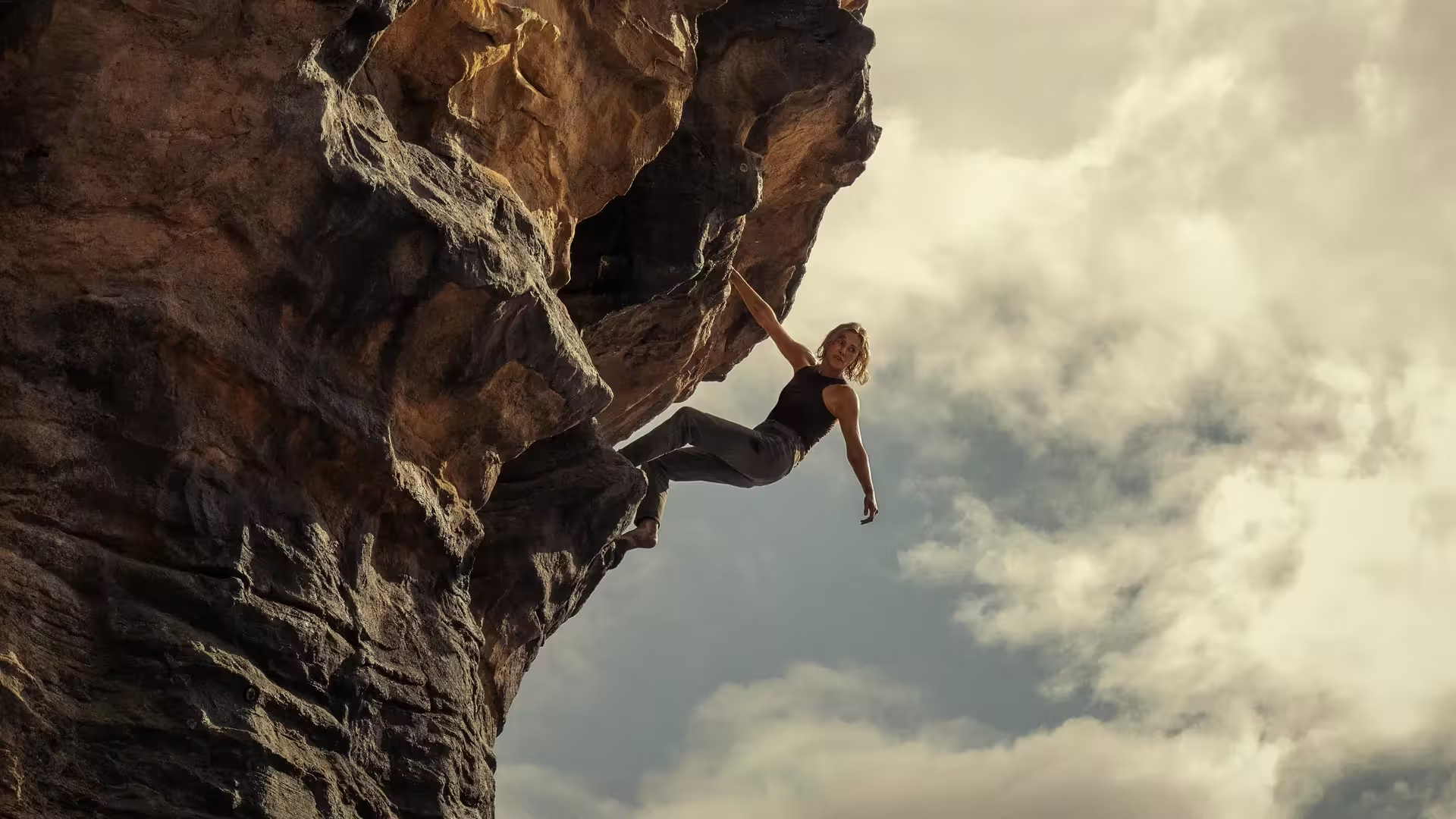
It’s absolutely true that for a woman traveling alone, it’s always better to run into a bear than a man. There are no bears in Australia, where the survival thriller Apex—available on Netflix starting April 24—is set, and Charlize Theron’s character, an extreme sports enthusiast, will have to fight for survival against an attacker who is less hairy but more cunning.
Apex begins like Cliffhanger, with Charlize Theron in Sylvester Stallone’s place, climbing a Norwegian peak with her partner Tommy (Eric Bana). However, he is the high-mountain expert, and she is the less experienced and more impulsive climber who survives nature’s perils while he perishes. Devastated by her loss, Sasha adopts the strategy of the seminal female-driven horror film The Descent: channeling her grief into extreme sports—and as far away from the rest of humanity as possible. Unlike the speleologist Sarah, who chose to venture into the depths of a cave with a handful of friends, Sasha decides to tackle the Australian Blue Mountains alone. While stocking up on supplies, she runs into a group of intrusive hunters and a poacher with a disturbing demeanor: the latter, Ben (Taron Egerton), decides to make her his next prey.
If there’s one thing Icelandic director Baltasar Kormákur does well, it’s capturing the essence of the mountains. He proved it with one of the best films ever made about their inscrutable nature, Everest, and he does it again in Apex in every scene where Sasha takes on a climb. Every shot is breathtaking, every view from above makes you dizzy, every conquered rock face sends shivers down your spine. Kormákur manages to convey the excitement that fuels the protagonist’s adventurous spirit even to the viewer sunk into the couch, and in general, all the footage focusing on the beauty and risks of nature—endless vistas, wild waterfalls, mysterious caves—is spectacular.
Perhaps because he comes from a place that isn’t particularly lush, Kormákur has forgotten about the animals: with the exception of a small snake, there is no wildlife in the Australian forests—notoriously quite crowded—of Apex; there are no biting creatures nibbling at the heroine’s bare feet, and it’s unclear what Ben and the others usually hunt. Perhaps he has to fall back on people because all other living beings—insects, birds, mammals—have inexplicably migrated elsewhere.
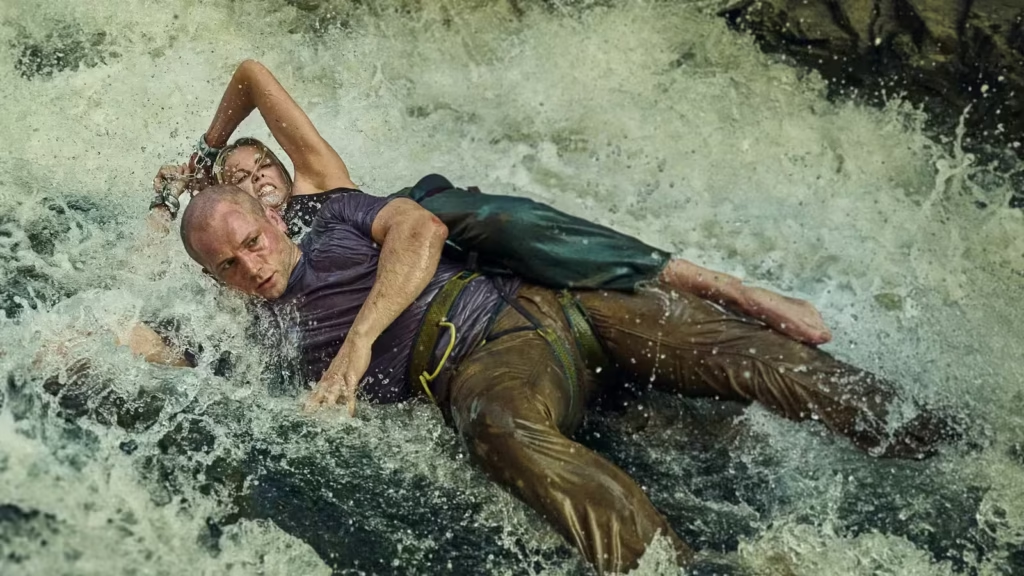
The location Sasha chose is, in fact, notorious for the staggering number of people who have gone missing in the area, presumably due to the dangers of the natural environment. Just as mysteriously, no one has ever thought to investigate the matter further, step up the search efforts, or identify the critical areas. Even more suspicious is the fact that no body has ever been found—not even a single body part. Another inconsistency: when Ben starts hunting Sasha, she never considers the obvious—namely, that a woman nearly six feet tall who can scale rocks with just two fingers could physically match a frail little man.
We often wonder why she doesn’t turn around, kick him in the face, and throw him off the rapids. As suggested, the heart of the film—which coincides with the chase—and thanks in part to the film’s brief runtime of about an hour and a half—has excellent pacing. Whether it’s a rafting scene, a climb, or a breathless escape through the forests, Apex is tense and fast-paced, but everything else falls flat, especially if you don’t set aside all the narrative and logical flaws mentioned above.
The moments when the film shifts from a survival thriller to a psychological thriller and a drama are quickly glossed over: the pain of grief lingers more like a hazy memory, and Ben’s mental disorders and serial-killer perversions remain a vague pretext (and since the photo with his mother seems to date back two centuries, is he a vampire?!). Even the discussion of the unbearable toxic masculinity that deprives millions of women worldwide of the ability to go out alone with peace of mind—and the discomfort of men irritated and intimidated by the model of a strong, independent woman portrayed by Sasha—is merely touched upon and never explored in depth.
Ultimately, Apex is a film we appreciate as pure entertainment and for its decent dose of adrenaline; it could have been a bit more of a must-see for lovers of wild nature, and in particular the mountains, had it been released in theaters, but unless you have a screen the size of a church hall, much of that charm is lost.
