
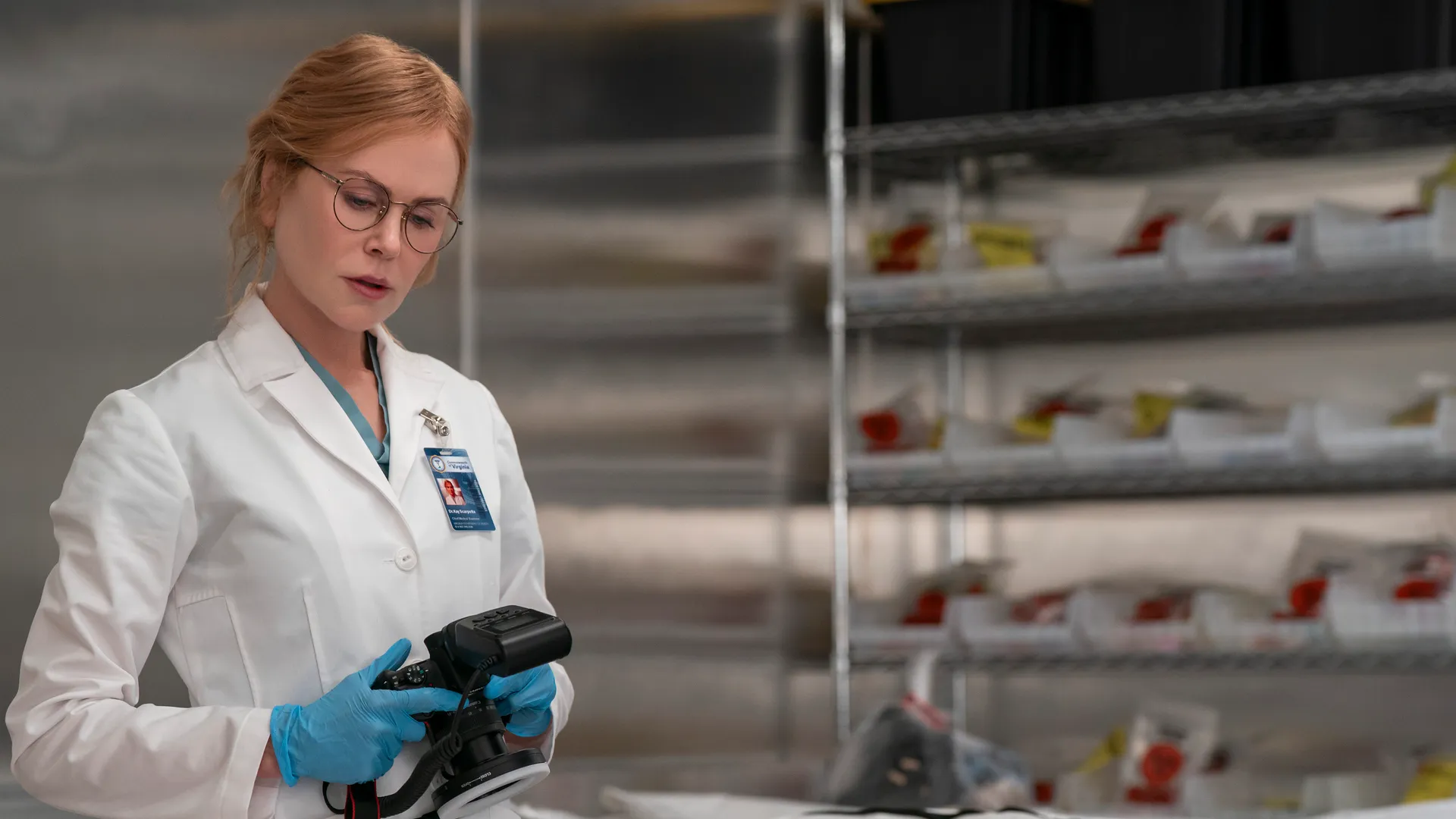
Scarpetta, a small-screen adaptation of two best-selling novels by Patricia Cornwell, boasts an impressive pedigree: produced by Blumhouse (the studio behind Paranormal Activity, Insidious, and other horror film sagas) and directed by David Gordon Green (director of the last three Halloween films), it boasts an all-star cast featuring Nicole Kidman, Jamie Lee Curtis, Bobby Cannavale, Simon Baker, and Ariana DeBose. The character who gives the show its name, Kay Scarpetta, is the medical examiner protagonist of immensely successful forensic thrillers.
Prime Video, with The Lord of the Rings, The Wheel of Time, Bosch, Reacher, and Alex Cross, has learned to take full advantage of the opportunities offered by adaptations of literary sagas of varying lengths, and with the Kay novels, it has material for years, drawing on some thirty books. As mentioned, Scarpetta’s premise is stellar. The results are divisive: disappointing and pretentious for some, exciting and articulate for others. In reality, it is all of these things, and those who have watched the entire season before commenting will add one more adjective: unresolved.
The American television tradition is largely based on procedural dramas, dark shows centered on serial killers such as Criminal Minds, Hannibal, or Dexter, and on brilliant profilers or pathologists such as Bones, Body of Proof, or Crossing Jordan. Scarpetta follows this tradition, but distances itself from less prestigious network series and moves closer to another genre, namely family drama. In addition, it adopts a daring (and, we would say, imprudent) dual narrative, intertwining a plot from the past, set in the 1990s, with one from the present.
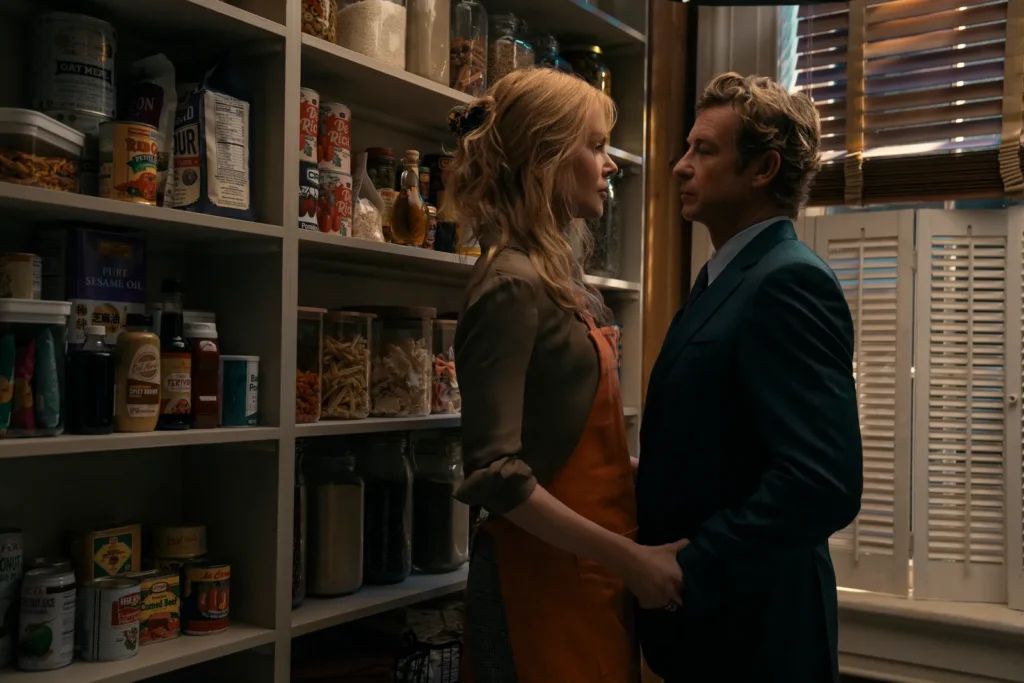
In both, a novice Kay Scarpetta and her more mature version investigate the gruesome murders of several women with similar characteristics, while the family affairs of the protagonist and her partner Benton intersect with those of her sister Dorothy, her husband Pete Marino, and her daughter Lucy. Each of the heroines is dealing with grief: the two sisters with the death of their father, which they never got over in their youth; Lucy with the death of her wife Janet. Each character, therefore, has two interpreters: Kay is played by Nicole Kidman and Rosy McEwen, Dorothy by Jamie Lee Curtis and the rediscovered Amanda Righetti, Pete by Bobby Cannavale and his son Jake, and so on.
The first season adapts Cornwell’s first book, Postmortem, and her most recent, Autopsy. The authors’ ambition is to elevate newsstand fiction to the level of pay TV, but in the transition from theory to practice, the critical issues increase as the episodes progress. The incessant alternation between past and present, although supported by similarities in situations and events, is heavy and chaotic. There is something elegant and sophisticated, as one would hope for the entire production, and that is the soundtrack, which alternates Mark Isham’s score with some classical inserts such as Schubert’s Piano Trio No. 2 in E-flat major, Op. 100 by Schubert – recurring during Kay’s autopsies (and in the vampire cult film Miriam Wakes at Midnight) and sophisticated contemporary tracks such as House of the Rising Sun sung by Sinéad O’Connor.
The highly dramatic tone that informs Kay’s complex relationships with her relatives, which revolves mainly around the conflictual relationship between the two sisters, often borders on soap opera territory. Dorothy’s envy towards her sister, the smug cruelty with which she steals her daughter’s love, and the conflicts with their respective partners take up a large part of the film. Added to this is Lucy’s obsession with bringing her beloved deceased back to life, which we will return to because it is the most interesting aspect of the series. Their psychodramas are not interesting enough to justify all this attention, but they certainly offer an opportunity to admire the beauty and skill of Curtis, who overshadows Kidman with her mere presence.
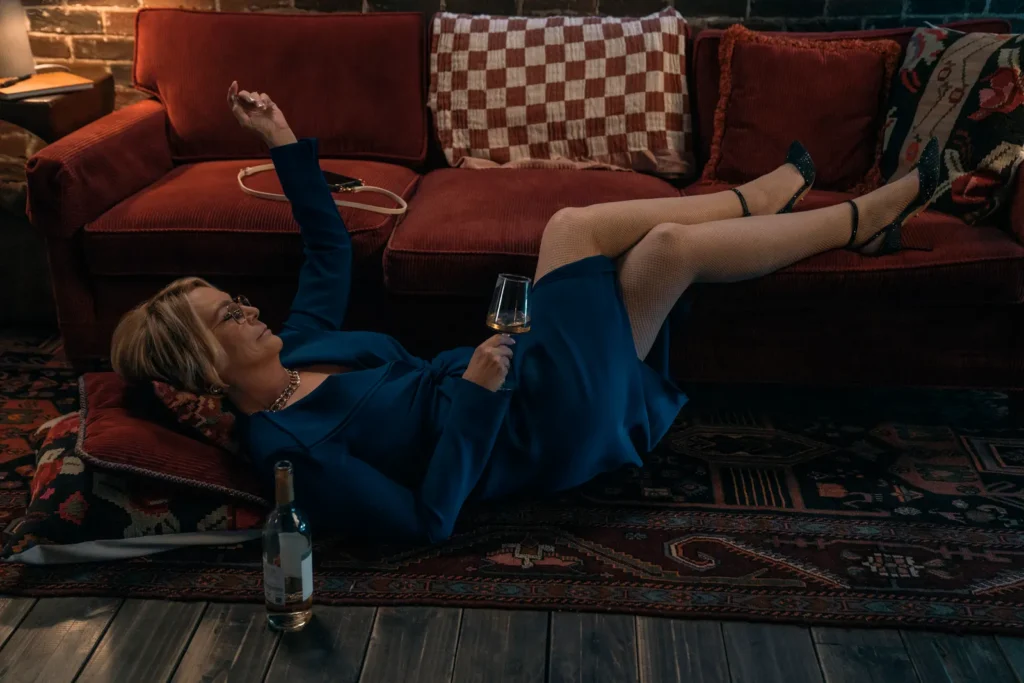
When the bickering between the two, who are perpetually at odds, escalates into bitter conflict, the chemistry between the actresses reaches its peak: they truly seem like two sisters consumed by ancient grudges. Of Italian origin, as suggested by Kay and Dorothy’s surnames, the two allow their respective actresses to try their hand at the language: we recommend watching the series in the original language, as you will be rewarded by the experience of watching Kidman and Curtis insult each other with more than familiar terms.
The extension of the family drama is therefore to the detriment of the procedural side, which in some episodes ends up so far in the background that the audience forgets that there is a serial killer to be identified, almost showing a lack of respect for the victims, fortunately not real, of the brutal crimes perpetrated in both eras. When the plot focuses on these and the investigations, everything becomes more beautiful: Green and Blumhouse guarantee a level of realism and brutal and meticulous accuracy in reproducing the examinations of the corpses and their condition, which borders on horror. The crimes and their modus operandi are genuinely gruesome and perverse. The only thing darker and more frightening is the minds of some of the characters, or at least this is what we are told by the characters’ dialogues, in the absence of adequate psychological insight.
A few words should be said about an extremely topical subplot linked to the character of Lucy, who spends more and more time conversing with the AI avatar of her beloved deceased friend. Her mother and aunt see her relationship with the simulation as toxic and dangerous, as a form of addiction that undermines the girl’s mental balance, but the narrative raises other considerations. While Lucy genuinely cultivates the desire to bring her partner back to life, she also uses her interactions with Ai to heal, in a way that has already been applied in reality to process grief, with mixed results. Scarpetta’s first season leaves this and other issues unresolved, and as such, the series fails to live up to its claims and expectations. Projected towards a future of numerous seasons, perhaps it will adjust its aim.
