
Tommy Wirkola’s horror films have delivered better results in the past. Stories about man-eating sharks, belonging to the killer animal subgenre and the shark movie genre, have given us unforgettable thrills in the past. Thrash, now on Netflix, aside from a couple of amusing scenes, offers nothing new. You can watch it anyway—after all, you have to spend the weekend doing something. Yes, it takes a touch of irony and leniency to approach this film and avoid spewing yet another venomous judgment from a snobbish critic. The good Wirkola, the Norwegian director of A Quiet, Violent Night, is not a consistent artist and alternates between delightful films like the one about the violent Santa Claus, ferocious ones like the Nazi zombie cult classic Dead Snow, or unsettling ones like the wicked black comedy The Trip, and mediocre films like the sequel Dead Snow 2 or Hansel & Gretel: Witch Hunters.
Thrash is set in a small coastal town in South Carolina that is bracing for Hurricane Henry. One character suggests renaming it Ted (after Bundy) because it will be the most violent storm ever seen, but we think “Henry, Rain of Blood” would have been a fantastic nickname. Among the main characters are three young siblings who are already survival experts thanks to foster parents who consistently leave them to fend for themselves; Dakota (Whitney Peak) is a girl who has suffered a loss, and Lisa (Phoebe Dynevor) is about to give birth. Dakota’s uncle is a marine biologist, Dale (Djimon Hounsou), who is rightly concerned about the arrival of what promises to be the storm of the century. He delivers the film’s only funny line, reminding us that the much-feared man-eating sharks actually eat very few people: nothing compared to the ferocious and lightning-fast river hippos of his homeland in East Africa. Dale, however, recalls that the only time he saw one of these creatures scared was when the hippo encountered a shark. That day, he decided to become a shark researcher. Why is that so important? It has to do with a shark he knows, but no spoilers.
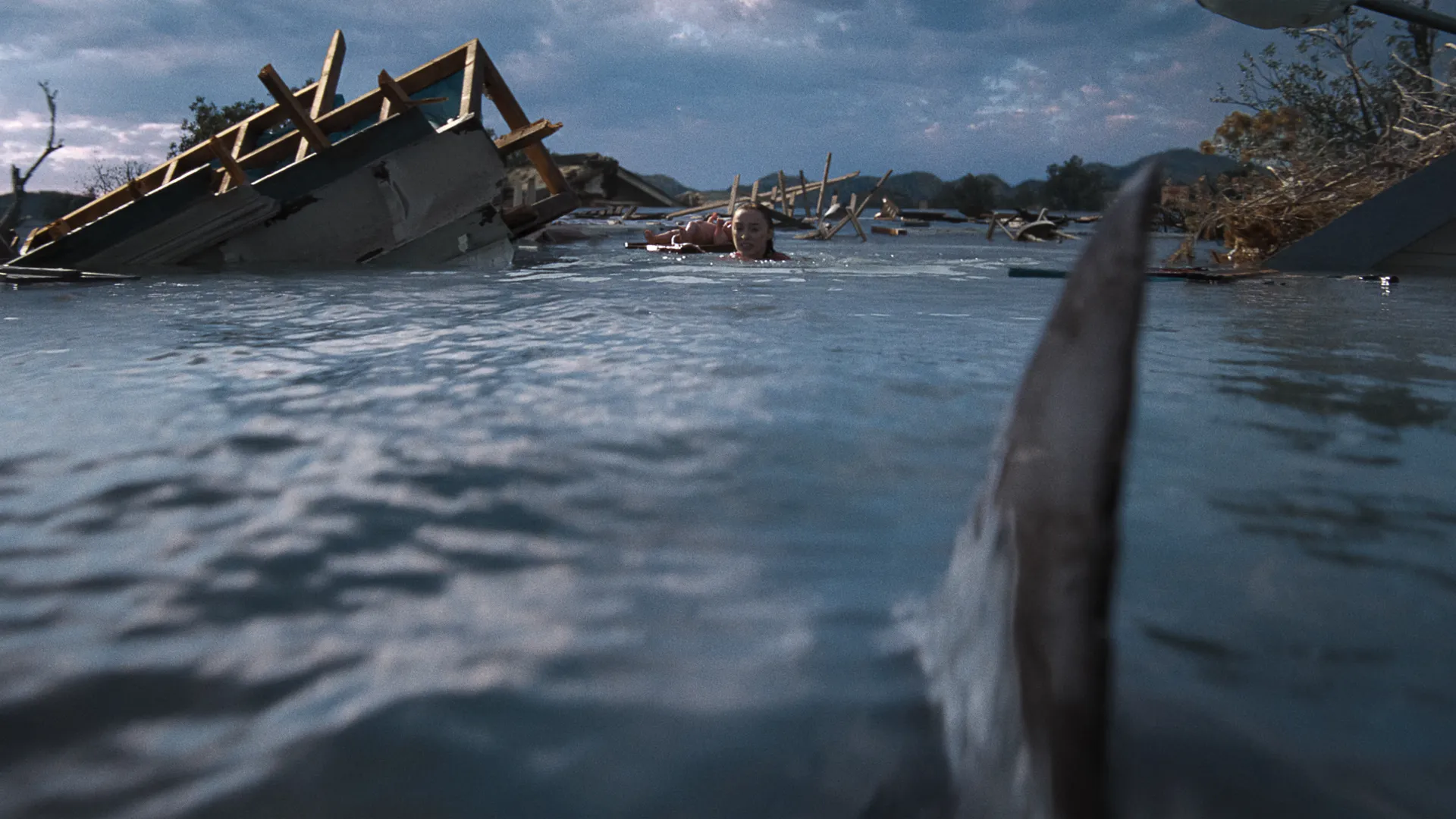
“Thrash” works better as a disaster film than as a horror movie. Some scenes in the film, shot in Australia—especially the (relatively) early tsunami sequence (it doesn’t quite reach the level of The Impossible, but it’s well-shot) and the nighttime scenes at water’s edge—are fairly spectacular. Wirkola is a veteran; he knows how to maintain a tight, fast-paced rhythm, but this time he fails to sustain the tension: instead of biting their nails while waiting for a hungry shark to emerge from the waters flooding the city, the audience is mentally planning their grocery shopping. The film is rated “R” (in the United States, this strikes fear into the hearts of distributors and exhibitors, as it’s tantamount to box office death). It flaunts this rating as if it were a medal of honor, but there isn’t much gore to justify it: a lot of severed limbs, blood pooling in the water, disembowelments—the usual. Knowing Americans—Thrash is Made in the US (and Australia)—it’s more likely that the ban is due to the protagonists’ swearing, which is more than justified when you’re trying to escape a hurricane, pounding rain, cars and trees crashing into you, and toothy sharks tearing off limbs underwater without even showing themselves.
The parallels with the glorious Sharknado saga are inevitable, but in reality… there aren’t any: Wirkola’s film takes itself quite seriously, which is a shame—a good dose of humor would have done it good. The humor that is present tends to be unintentional (the hilarious childbirth scene, the surprise appearance of a familiar face that could have turned the film into a cult classic). With a non-existent plot (and the main characters always magically appearing in the right place), banal dialogue, superficial relationships, and no character development (not that it’s essential)—Thrash’s greatest strength is its short runtime, under ninety minutes. Added to this is the precision with which it wastes no time in throwing the viewer directly into the eye of the storm, before drowning in the full array of genre clichés and perpetual déjà vu. We won’t rail against a low-budget disaster movie shot in a puddle, but you don’t see sharks often enough to consider this a shark movie.
