
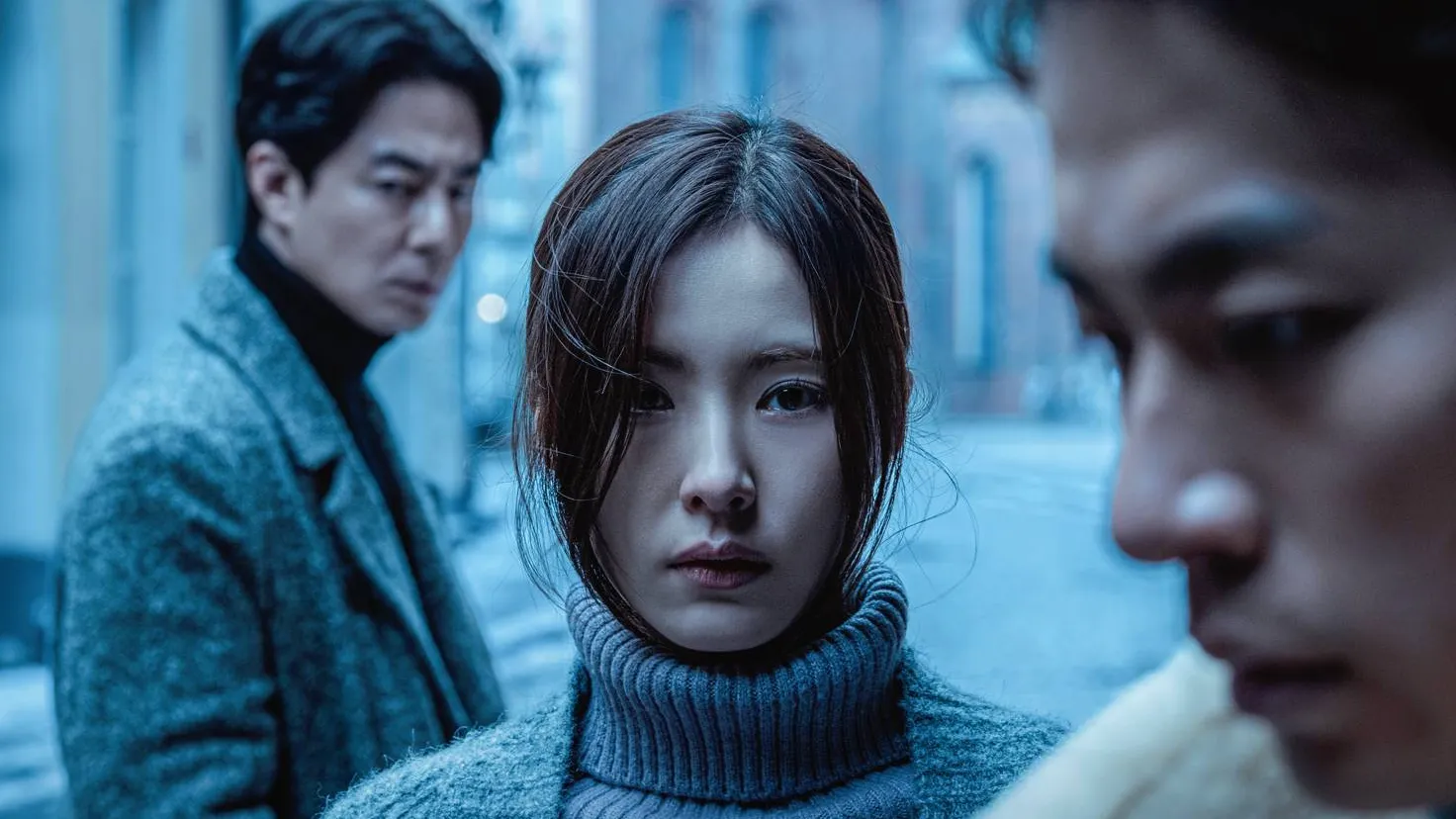
In Netflix’s most-watched rankings, the dominance of American productions is now a distant memory: British, European, and Asian productions are taking the lead. This week, live-action adaptations of Japanese comics, a Thai series (Red Line), and the K-movie spy thriller Humint—which debuted Thursday and immediately entered the platform’s Top 5—are dominating the charts. Nothing new here—we’re used to seeing Korean productions in the rankings.
For this film, directed by Ryoo Seung-wan, the same applies as for other movies that arrived directly on the streaming platform, such as Peaky Blinders: The Immortal Man or the upcoming Apex films, ideally better suited for the big screen, both in terms of spectacle and scope. The title Humint is an acronym for HUMan INTelligence (simply put, the voluntary and non-voluntary informants from whom information is extracted in the context of espionage); in this specific case, the North Korean hostess Chae Seon-hwa (Shin Se-kyung), at the center of an international criminal intrigue that escalates into a political conspiracy involving Russia and the two Koreas.
In frigid Vladivostok, a hub of illicit trafficking on the border between Russia and North Korea, the South Korean intelligence agency tasks NIS agent Zo (Zo In-sung) with gathering evidence of human trafficking—crucial to dismantling a criminal syndicate that controls the distribution of a mysterious and lethal drug nicknamed “bingdu” . After losing an informant to bureaucratic red tape, Zo cultivates a relationship with a new “mole,” Seon-hwa, the most beautiful and sought-after hostess at Arirang, a Vladivostok club run by North Korean nationals. The operation is complicated by the arrival of Park Geon (Park Jung-min), an internal affairs officer tasked with eliminating corrupt elements of the regime, particularly the slimy Hwang Chi-Seong (Park Hae-Joon). Geon is Seon-hwa’s former lover, and the two of them, along with Zo, become entangled in a political conspiracy that will test the limits of morality, loyalty, and love.
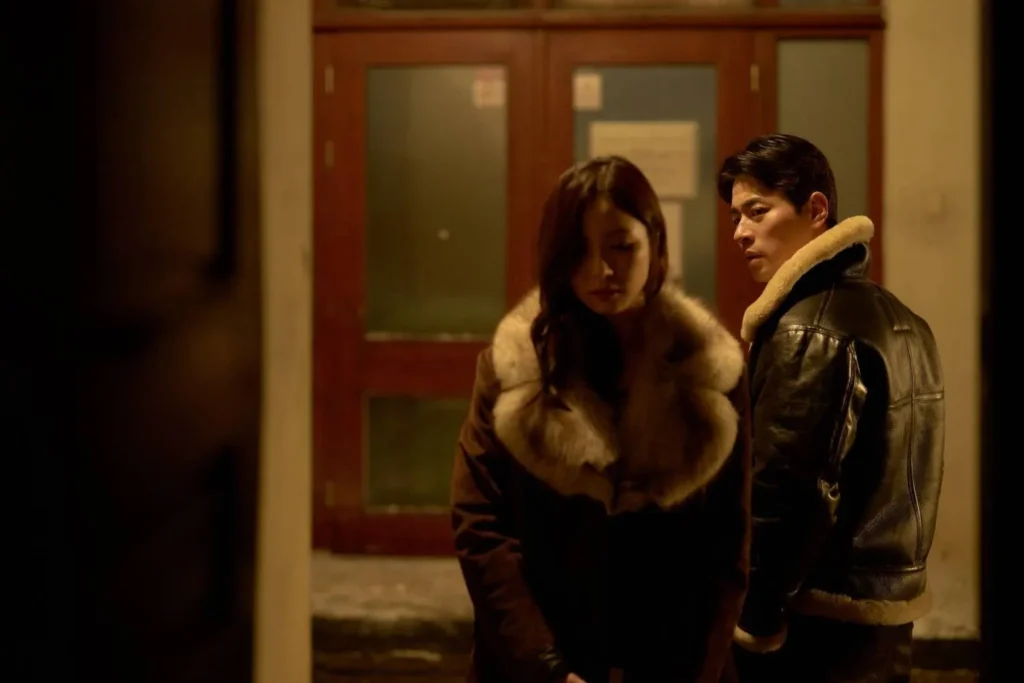
Just in case it wasn’t clear, let us reiterate: it’s a shame not to see Humint on the big screen. The film, produced by New – Next Entertainment World (the same studio behind Train to Busan, New World, and The Childe), deserved a festival run and a theatrical release—which it got in Asia but not in the West, where it was immediately acquired by Netflix. It is directed by Ryoo Seung-Wan, the so-called “Korean Tarantino,” a festival veteran (from Cannes to Berlin, from Toronto to London), and a die-hard fan of Hong Kong cinema who has (re)defined the codes of the Korean action genre with films such as the revenge thriller No Blood No Tears (2002), the crime thrillers The Unjust (2010) and Veteran 1 and 2 (2015 and 2024), the war film The Battleship Island (2017), the political action film Escape from Mogadishu (2021), and the crime film Smugglers (2023). In his last three works, including Humint, the lead is Zo In-sung, an elegant and haughty actor who, alongside the phenomenal and eclectic Park Jung-min, forms a memorable duo worthy of The Killer (side note: the American remake of John Woo’s cult classic is also currently trending on Netflix).
“Humint” is set in the present day but has the evocative charm of a Cold War-era spy story. Were it not for smartphones and other technology, the setting, production design, cinematography, and overall atmosphere would evoke the 1940s and 1950s. Ruthless, soulless figures move through a foggy, ethereal atmosphere that seems to have been plucked from Dostoevsky’s “White Nights.” A couple of them, the two anti-hero protagonists, conceal souls full of passion and fury. The actors put considerable effort into revealing, behind their tough-guy looks and actions, Zo’s yearning for justice and Park’s romantic despair, and it is this unspoken passion—which, in Park’s case, leads to extreme romanticism—that sets this otherwise icy spy story apart.
At the heart of Humint lies a thwarted, impossible, and tragic love story, and for some, this will evoke memories of a 1980s masterpiece, Gorky Park. Shin Se-kyung, who replaced K-pop idol Nana, returns to a leading film role after several years with a part far more challenging than it appears: seemingly a purely instrumental character—she is the key to the mission—she must be convincing as the woman to die for. And she succeeds, with her quiet, stoic grace, the beauty that traffickers call Grade A+, and the unwavering loyalty she dedicates—risking her life—to a lover who hasn’t been in her life for years.
In a film whose not-insignificant flaw is a thin plot—yet one with excellent actors and a great director who make up for this shortcoming—that desperate romanticism mentioned above blends perfectly with the extreme violence of the film’s heart-pounding final thirty minutes. Nicolas Winding Refn had already shown us this in Drive: nothing unleashes the most brutal violence like the desire of a man in love to save the woman he loves from danger. Ryoo dedicates the final part of the film to a rescue mission that culminates in a very long, exhausting fight to the death, full of desperation and brutality. Between ingenious touches—the bulletproof display cases—and anthology-worthy choreography—the final, explosive three-way fight—Ryoo delivers action sequences that effectively blend technical perfection with emotional intensity. Not only does it evoke the glory days of the best action films from Hong Kong’s “heroic bloodshed” era, but it also honors their over-the-top sentimentality. Give us more like this.
