Image Credit: Universal Pictures
When a movie is as successful as Super Mario Bros. The Movie—that massive hit—everyone wants to have their say. The main challenge in creating a franchise following a surprise hit is that executives, collaborators, and even the top brass at multiple companies all have an idea of what should happen in the new film, and that the marketing department is so excited they want to cram everything into what will undoubtedly be another blockbuster. You therefore need to pare down, cut out, and include only what is absolutely essential. The impression upon watching The Super Mario Galaxy Movie, however, is that every request was granted.
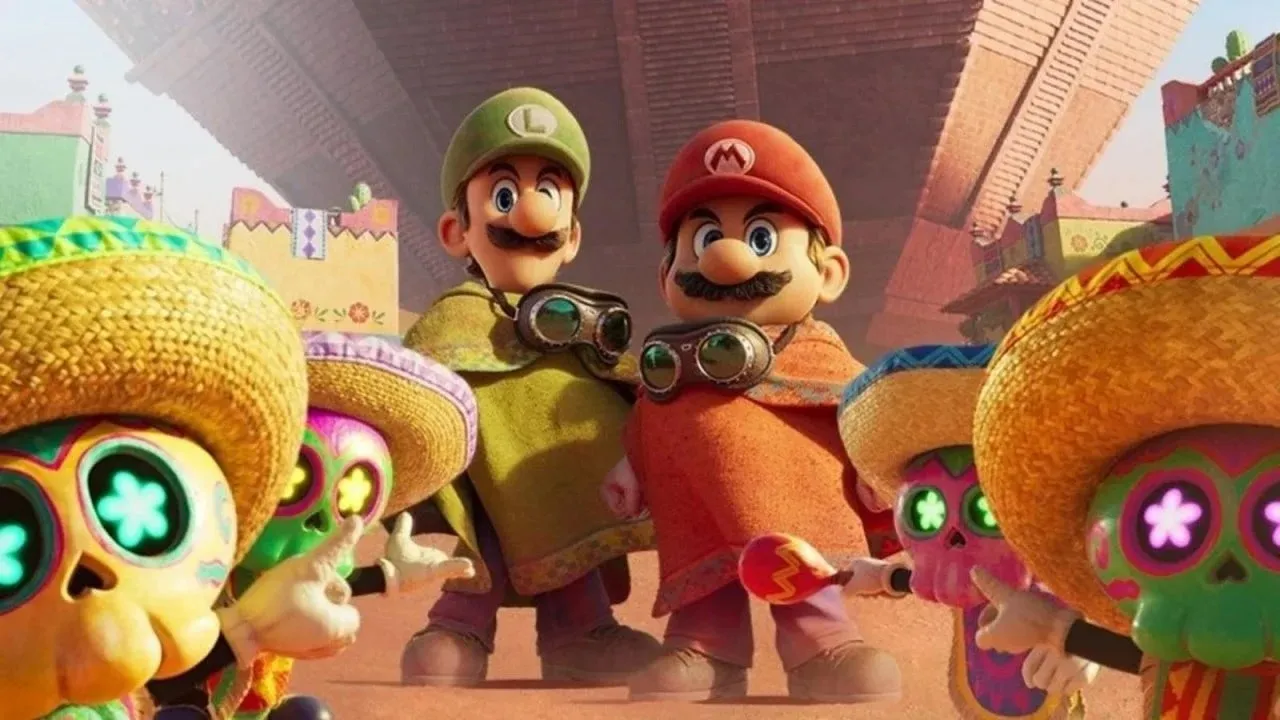
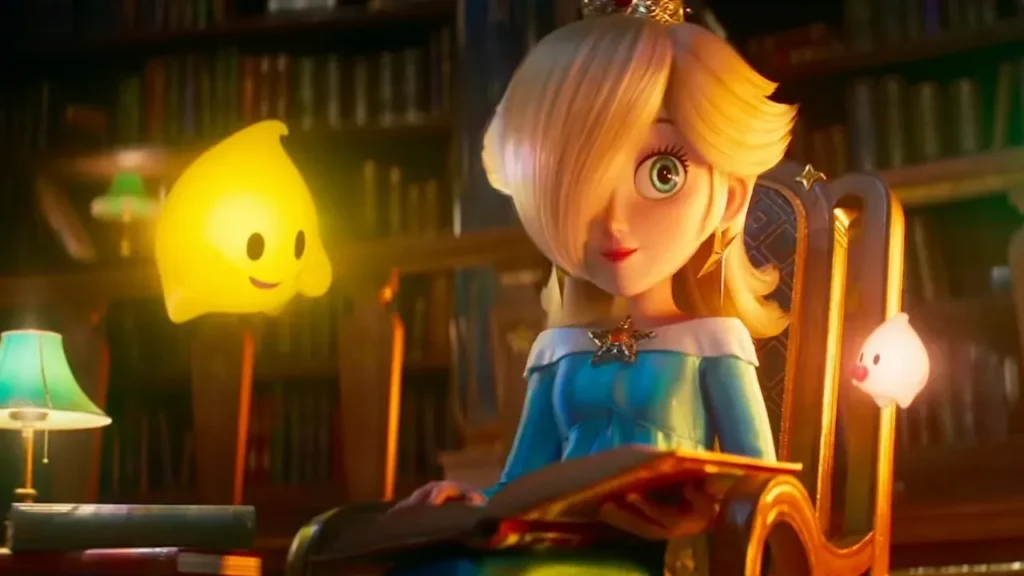
The creative team is reportedly the same as the previous film’s—which didn’t exactly shine in terms of writing—and the runtime is nearly the same, an hour and a half, but this time the impression is that everything was crammed in, forced in, and connected as best as possible. The opening is classic and solid: a kidnapping by Bowser. As always. Except now there are two new characters involved: Rosalinda, the kidnapped one, and Bowser Jr., the kidnapper. Mario and Luigi, along with the others and joined by Yoshi, gear up to find and rescue her. It’s a fairly basic plot that allows for all sorts of possibilities—and indeed, everything is thrown into the mix.
The beauty of Super Mario movies should lie in the subtle way in which different gameplay elements are woven into a conventional story, bringing that world to life through narrative. Instead, here the journey through different worlds, the encounter with countless different characters, different situations, different enemies, and yet more levels, jumps, encounters, enemies, subplots, etc., etc., is a jumble that proceeds by sheer accumulation. And if the humor wasn’t exactly cause for celebration in the first film, here it’s unthinkable that it could hold up this heterogeneous mix. So it happens that, as in every second film of a saga, we learn the characters’ origins, thereby introducing the theme of the “big family,” as if we were in Fast & Furious, but there are so many other things to cram into the film that even that is merely hinted at.
It’s clear that Super Mario is, by its very nature, an animated film that—like all such films—is primarily aimed at an audience under the age of 15, while offering a sophisticated second layer of meaning for those accompanying them who know the character intimately through the video games. But there is really nothing particularly sophisticated about The Super Mario Galaxy Movie; in this episodic narrative, the only possible second layer of meaning lies in the almost infinite number of references and allusions to elements drawn from the various games. These references range from the obvious to the hidden, from the most famous tunes to the less-fortunate characters, or even just to items marketed by Nintendo in the 1980s. More than a movie, it’s a museum of Super Mario’s commercial history.
Its only merit is the same as that of the first film: the exceptional technical craftsmanship—a first-rate effort in texture, surface, and fabrics that combines a distinctly puppet-like design with an impressive realism in the materials. But the writing is so weak that not even this visual concept is put to good use. After all, Super Mario cartoons don’t need to invent anything; in fact, one could say these are the only cartoons in which nothing is invented. Everything is necessarily an assembly of 40 years of video game creations and three-dimensional worlds. There is no character, setting, or move that hasn’t been invented by Nintendo; the films must not touch them, must not modify them—they must only adapt them.
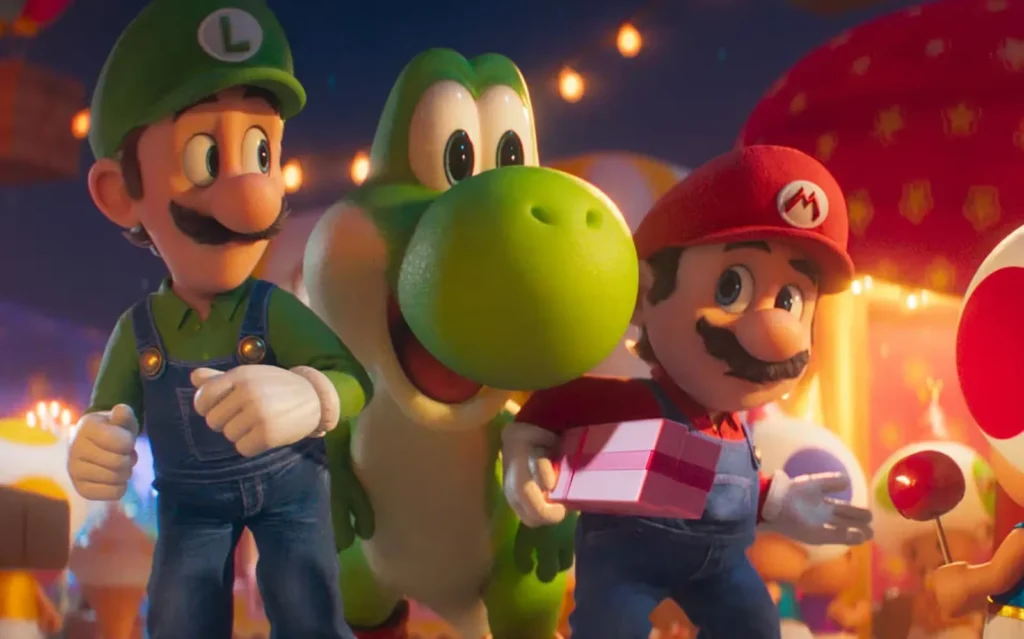
It’s a fascinating dynamic, because it results in a visual richness that no other cartoon can match. No one can come up with that much material for a 90-minute film; only someone with a massive library to draw from can present a universe that’s already fully formed. The least they could do would be to put it together properly—that is, create a coherent mythology that holds everything together—but even that isn’t clear. While the story holds up initially, once the film passes the halfway point, it begins to lose control of the characters who appear, drawing from other Nintendo games (a marketing need to test potential new films), new references to themes from different Mario video games (a need to remain faithful to everything), new villains (a need to create potential new marketing products), and new locations that hint at how that narrative world works (a need to start expanding the universe)—all in a constant barrage of information and references within which the sense of the protagonists’ adventure is lost.
Just like the video game franchise, this film series also seems headed for utter inconsistency. But while it’s acceptable for video games to undergo constant shifts in lore and story revisions over the course of 40 years, it makes far less sense for this to happen in a single movie. How many origin stories can there be? How many revisions of powers and changes in tone, style, and character nature are acceptable? How many endings can a movie have before someone says, “Enough!”?
About the Author