Amazon MGM Studios
It’s hard not to be captivated by Project Hail Mary. The visuals and story that directors Phil Lord and Christopher Miller (with Drew Goddard writing the screenplay) have managed to bring together—adapting Andy Weir’s book of the same name—continue their work on impactful narratives built on a strong foundation of love and humanity. Ryan Gosling aside, Sony manages to deliver—45 years after E.T.—a film that is just as epoch-making and iconic, bringing to mind that family-friendly hit Spielberg created in the 1980s.
The Son of Cast Away and Interstellar
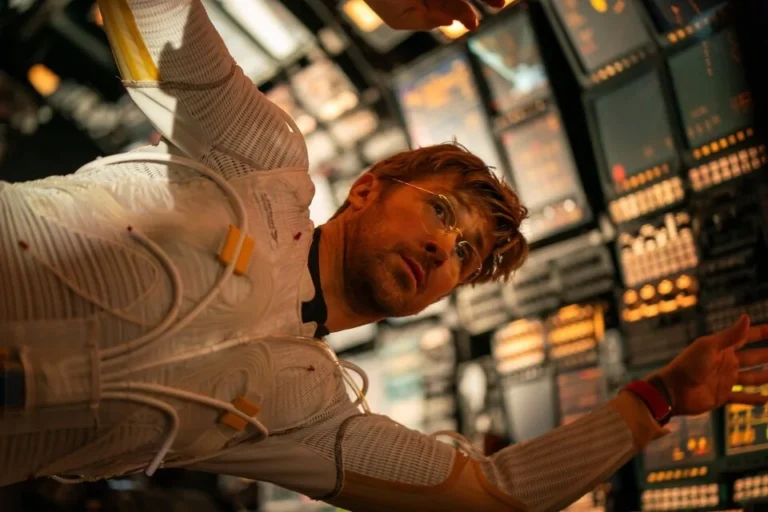
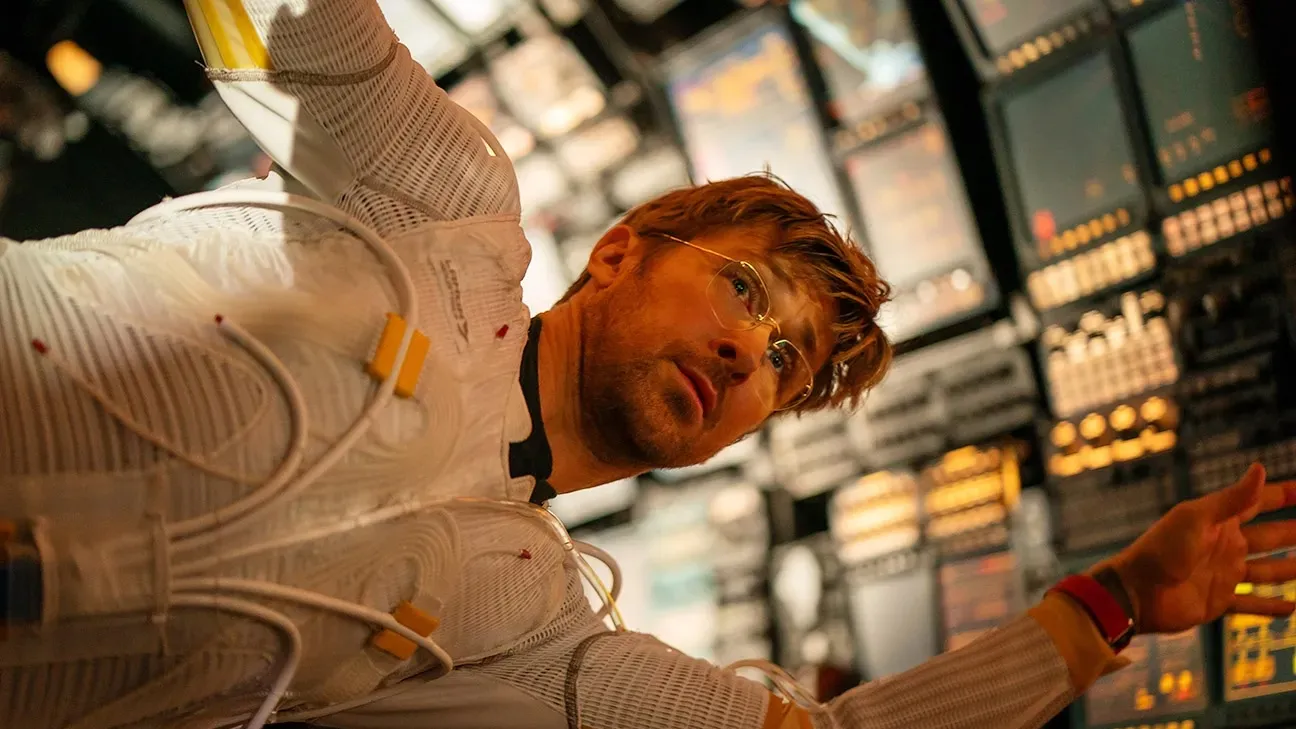
The film follows Ryland Grace (Ryan Gosling), an astronaut who wakes up from a coma with no memory and discovers he is the sole survivor of a space mission crucial to saving humanity. Grace is tasked with an impossible mission: traveling into deep space to find a solution to a catastrophe threatening Earth, while a mysterious alien may hold the key to his success.
Lord and Miller’s direction attempts to navigate multiple registers simultaneously. Project Hail Mary often has the feel of a Disney adventure, yet it doesn’t shy away from pursuing the spectacular epicness of Spielberg’s cinema. At the same time, the film aspires to something more: a science fiction capable of weaving existential reflections into its narrative. There is no shortage of darker, more melancholic moments, even within a story that remains firmly anchored in the comedic realm. The result is almost as if Robert Zemeckis had directed Interstellar instead of Christopher Nolan.
An optimistic story about friendship
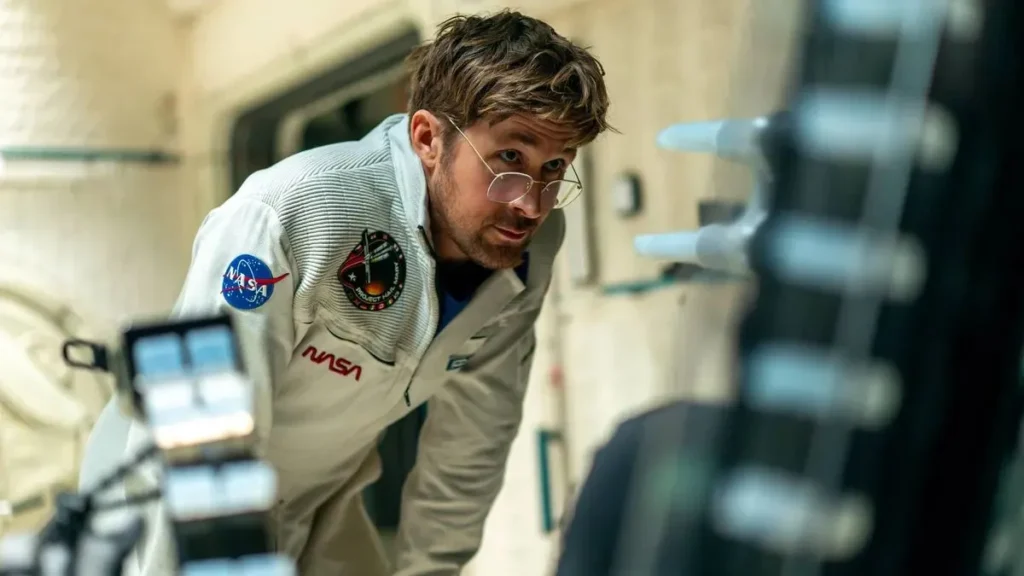
Project Hail Mary is first and foremost a film tailor-made for Ryan Gosling, who, with his glasses perched on the tip of his nose, once again displays that charming, effortless awkwardness of his, suspended between the guy next door and the star who’s fully aware of his own charisma. In this mix, Gosling continues to prove himself a winning bet.
In the role of Ryland Grace, the qualities that have made him one of the most recognizable stars in contemporary cinema are fully on display. Seeing him as an awkward teacher works precisely because the actor manages to find a credible emotional core for the character: despite a rather thin backstory, which offers little beyond the mission itself, Gosling effectively conveys the teacher’s profound loneliness and his growing insecurity in the face of Project Hail Mary.
Even the unexpected friendship with the alien Rocky represents one of the film’s most fascinating aspects. The dynamic between the two is imbued with an almost disarming optimism—and perhaps a necessary one, these days. By reworking the conventions of science fiction, Lord and Miller transform the alien into an ally: someone with whom to share knowledge and join forces to overcome a common threat. It is a reinterpretation that places the values of friendship and mutual exchange at the center precisely in times of crisis.
A textbook blockbuster
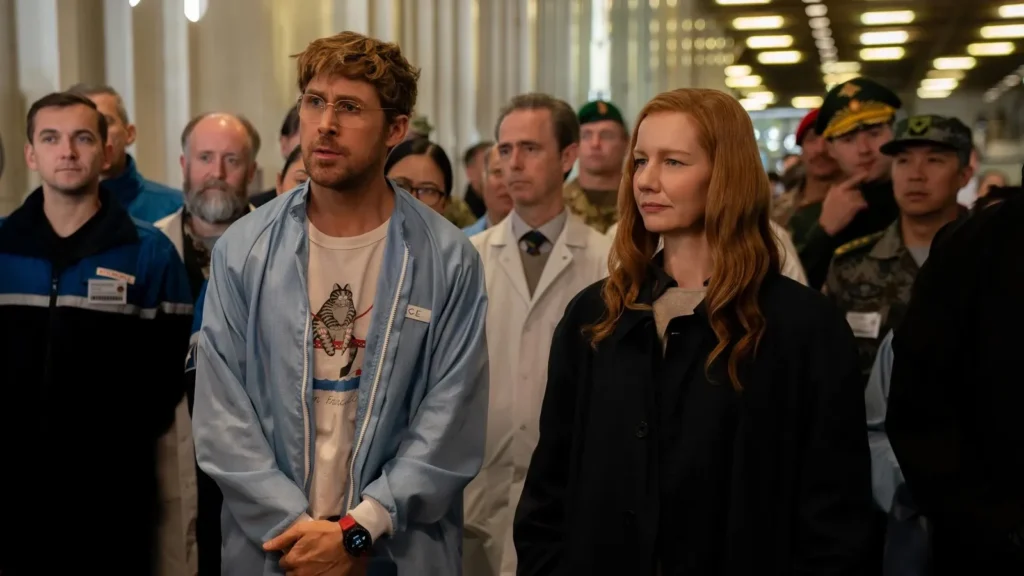
The clean, measured direction, the spectacular cinematography by Greig Fraser (Dune, The Batman), the visual and special effects supervised by Paul Lambert (Dune, Blade Runner 2049), and the score by Daniel Pemberton (who previously collaborated with the directors on Spider-Verse): all these elements combine to elevate The Last Mission: Project Hail Mary beyond the boundaries of a simple adventure film, transforming it into a work of epic scope and spectacle. It is clear that the production did not hold back in aiming for the highest standards on every front, seeking to create a film capable of satisfying a very broad audience: from the most discerning cinephile to the ten-year-old child brought to the theater by their parents.
The film does, however, make a clear effort to keep all its tonal registers under control, shifting naturally from major to minor and back again. It doesn’t always manage to find something truly new or substantial to add to the genre, though it moves with a certain grace. Even the aggressive marketing campaign, in part, ended up speaking for the film before it could do so on its own. Despite these limitations, international critics agree that Project Hail Mary accomplishes its mission: to entertain, thrill, and remind us just how much cinema can still be pure spectacle. After all, that’s all one should ask of a blockbuster.
The Last Mission: Project Hail Mary is firmly focused on spectacle and emotional engagement, recapturing the spirit of family-friendly adventure films. Amid epic ambitions, existential reflections, and comedic moments, Lord and Miller craft a narrative that seamlessly blends different tones, bolstered by Ryan Gosling’s charisma and top-notch technical execution. While it doesn’t break new ground, the film still succeeds in its mission: to entertain, move audiences, and remind us of the spectacular power of great cinema, thanks to a deeply optimistic story about the value of friendship.
About the Author