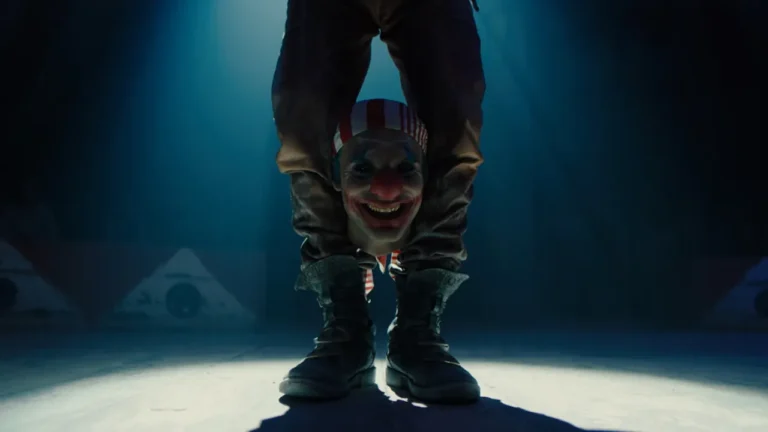
Image Credit: Sony Pictures Entertinment
Cinema and dreams are underground realities, inhabiting the same symbolic plane, occupying the same darkness, and speaking the same language. Cinema has often been compared to a dreamlike experience, a suspended and ineffable dimension that unfolds the moment the projector’s beam of light pierces the darkness of the theater. This comparison is not so strange when you consider that the film industry has been dubbed the dream factory, nor is it an anachronistic suggestion, given that countless authors, throughout history and even today, have chosen that immense white space as their space of choice, a symbolic territory in which to project hopes, fears, and distant memories.
On World Sleep Day, which falls on the second Friday in March, we let ourselves be carried away by cinema and the way in which, over time, the seventh art has brought to the screen its relationship with dreaminess, with dreams, and with everything that is linked to an elsewhere that is often forgotten, repressed, often discussed, and focused on. Many directors have devoted themselves to this central theme, making it the subject of their films, choosing to combine the visible and the invisible, the repressed and the manifest, here and elsewhere, reinterpreting nightmares and dreams in a cinematic key. That is why we have chosen ten films, ten wonderful works that have been able to convey their own particular dreamlike vision intertwined with a story capable of giving the viewer the feeling of having lived, for a few hours, inside a dream.
A lizard with a woman’s skin (1971)
In 1971, Lucio Fulci directed one of the most visionary and powerful Italian thrillers of his time. Carol Hammond dreams about her neighbor and kills her in her dream. When the body is found exactly as she had dreamed, the line between reality and the unconscious begins to crumble. A remarkable, tense, often underrated Hitchcockian work, shot in Fulci’s precise and recognizable style. A pure thriller, a dreamlike, profound, violent, visceral film.
Jacob’s Ladder (Allucinazione perversa) (1990)
Jacob Singer is a Vietnam veteran who, once home, begins to be haunted by increasingly disturbing and violent nightmares, apparitions, visions, and hallucinations. Jacob soon begins to fear that something during the conflict has changed his mind forever. The director of Flashdance and Fatal Attraction, Adrian Lyne, directs Tim Robbins in this dark and visionary psychological thriller that keeps the viewer constantly poised between reality and delirium, creating that space of uncertainty where the real and the unreal merge.
Dreams (1990)
Eight episodes, eight dreamlike visions drawn from the mind and memories of director Akira Kurosawa, who recounts his life in this work, using different registers for different seasons. Dreams moves naturally between fairy-tale moments and landscapes devastated by nuclear war, passing through a memorable encounter with Van Gogh, played by Martin Scorsese. Each segment has its own emotional temperature, a peculiar and intimate imprint, and together they form the artistic testament of a master who seeks the visual imprint of what he has gone through in a lifetime.
Spellbound (1945)
Ingrid Bergman and Gregory Peck star in this wonderful thriller by Alfred Hitchcock, embellished with drawings by Salvador Dalí, which takes us on an intense and whirlwind journey about a man suffering from amnesia. Dr. Petersen is a psychoanalyst who works in a clinic run by Dr. Murchison, who is about to retire due to a nervous breakdown. His replacement is Dr. Edwardes, a mysterious man with whom the doctor falls in love. However, Peterson notices that something is wrong with his behavior, marked by crises, phobias, and the conviction that he has done something tragically wrong.
Paprika (2006)
Paprika is the virtual alter ego of psychiatrist Atsuko Chiba, who has invented a machine that allows her to enter people’s dreams for therapeutic purposes. It is a brilliant scientific project, but it seems that someone wants to sabotage it. Satoshi Kon builds a masterpiece of Japanese animation around this premise, which also greatly inspired the work of Christopher Nolan, a work in which the boundary between reality and dreams becomes increasingly blurred and subtle.
Pan’s Labyrinth (2006)
Guillermo del Toro paints a picture of a post-war Spain oppressed by Francoism in 1944 to tell the story of Ofelia. Ofelia is a little girl forced to move to an outpost entrusted to Captain Vidal, her mother Carmen’s new partner. Despite the conditions of a difficult pregnancy, Carmen is kept close to the man who wanted her with him at all costs. Ofelia feels lost, disoriented, oppressed by that environment, and to escape the horror of reality, she takes refuge in another place inhabited by a faun, an underground kingdom visible only to those who know how to look.
Wild Strawberries (1957)
One of Bergman’s most powerful films. The story of Isak Borg, who takes a road trip from Stockholm to Lund, which becomes something more for him, an opportunity to take stock of his life. The clock without hands in the opening dream is one of the most explosive and emblematic images in the film, which begins with a nightmare, a disturbing dream that becomes the symbol of a man who has let life pass him by with detachment. A journey that turns into an inner journey for a man who, perhaps for the first time, has the courage to truly look inside himself.
Mulholland Drive (2001)
Betty and Rita, two actresses, an apartment in Los Angeles, a blue box, amnesia, a club where nothing is what it seems. Mulholland Drive is pure dreamlike cinema, where the logic of dreams, emotional, absolute, non-linear, takes over everything. David Lynch directs one of his most brilliant works, a magmatic, visceral cinema that does not explain, does not guide, does not offer any footholds.
A Nightmare on Elm Street (1984)
Wes Craven creates the monster par excellence, Freddy Krueger, the absolute evil that projects itself into the dreams of its victims, killing them without mercy. Craven’s brilliant insight is to make sleep a place of danger, a deadly trap from which it is difficult to escape, giving rise to one of the most fearsome creatures in the history of horror cinema. Freddy inhabits a dream world, yet his wounds are painfully real, which is why this film continues to disturb viewers to this day.
8½ (1963)
Federico Fellini directs the story of Guido Anselmi/Marcello Mastroianni, an established director who is about to write his next film, despite having lost all artistic direction. His exhaustion leads him to grope in the dark, to resort to ideas and inspiration, but it is all useless, nothing convinces him. Harassed and surrounded by actors, actresses, producers, and screenwriters, he floats between dreams, childhood memories, erotic fantasies, and guilt, losing himself in a great, poignant party where everything converges: dreams, reality, and fantasy.
About the Author